Journey

From Lajen to Seceda, the Seiser Alm and the Villnöss valley

A few days of sunshine in the spring or autumn forecast are often enough to send us looking for somewhere to stay in South Tyrol. We usually end up between Bolzano and Merano, where we sometimes sit outside in twenty-degree warmth while it rains back home. We take our bikes, go walking or visit a winery. We’ve explored the Dolomites from Bruneck, too, from Kronplatz to the Drei Zinnen. This time it’s Seceda we want to see. We know that ridge and the jagged Geisler peaks from countless photographs. Now we’d like to stand there ourselves. We choose Lajen as our base.

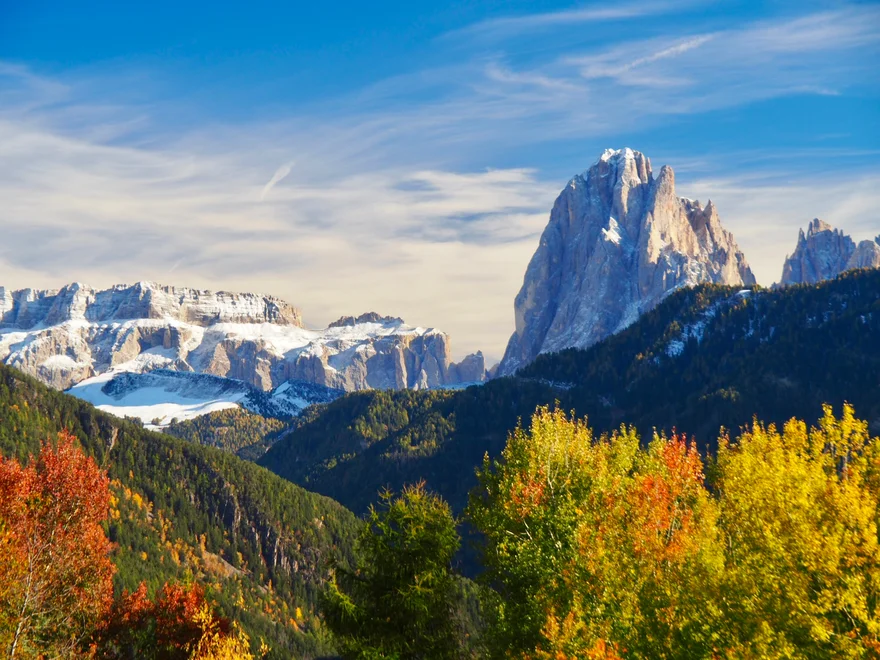
Autumn woodland below the Sella massif and Langkofel, seen from the Postweg near Lajen.
The mountains are already in view on our first afternoon, from the Postweg near Lajen.

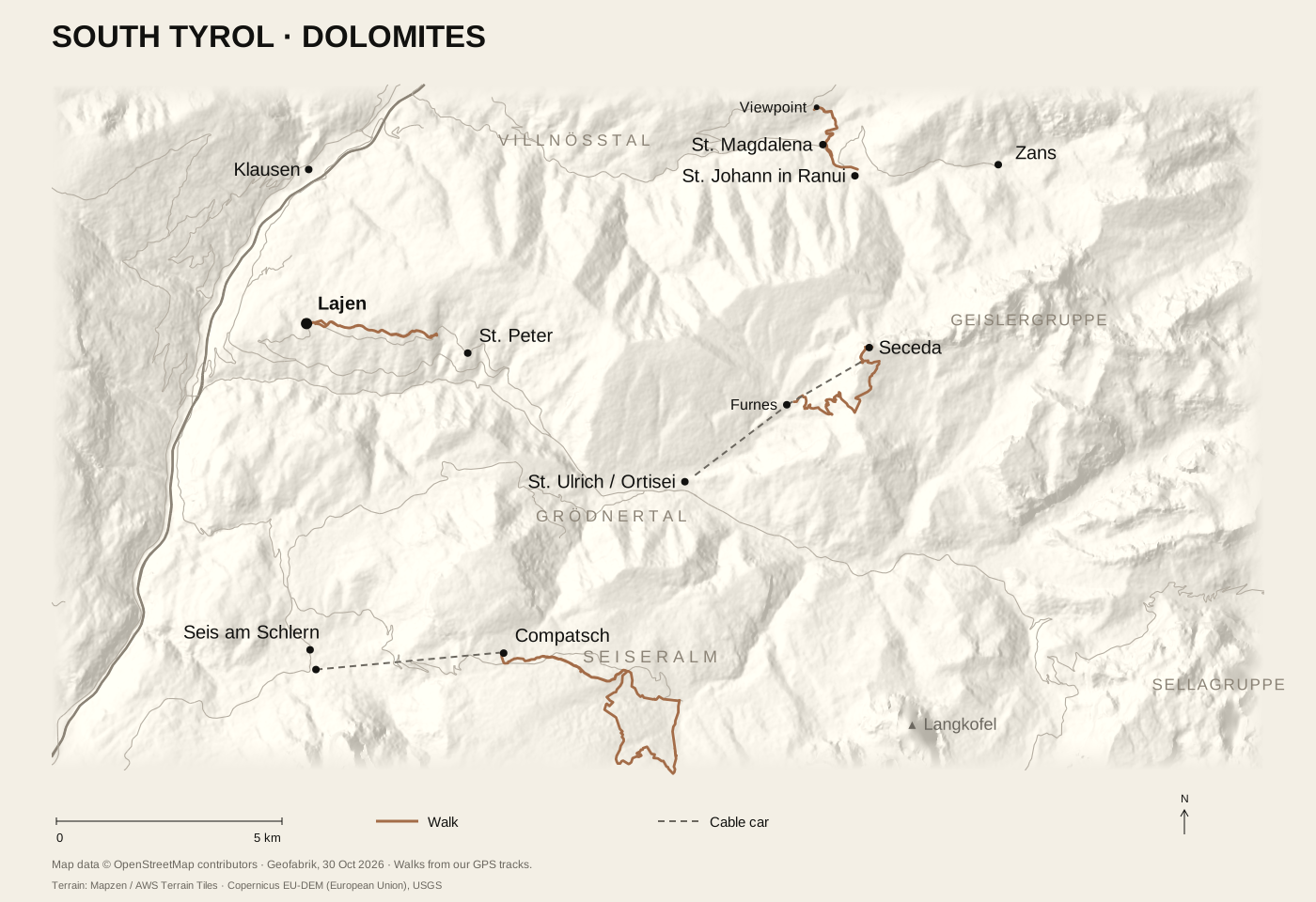
The places on our map

Relief map around Lajen showing the Postweg, the walks on Seceda and the Seiser Alm and in the Villnöss valley, and the cable car connections.
The places we visited, our four walks and the cable cars. Roads are included for orientation.Map data: © OpenStreetMap contributorsTerrain: Mapzen Terrain Tiles
Enlarge map
Scroll to explore the map

Lajen

Our base and an afternoon on the Postweg

Lajen suits our plans nicely. Ortisei is about half an hour away by car. So are Kastelruth, Seis am Schlern and the churches in the Villnöss valley. Zans is a little further up the valley. For our first walk we can leave the car where it is. On the afternoon we arrive, we take the Postweg towards St. Peter. It’s an easy path across sunny slopes, with the Langkofel and Sella mountains in view much of the way. Eventually St. Peter comes into sight, its church framed by the mountains. It’s getting late, so we turn back just short of the village. We drive through St. Peter the next day. The area around the church looks like a lovely spot to stop for a bite to eat or a coffee.
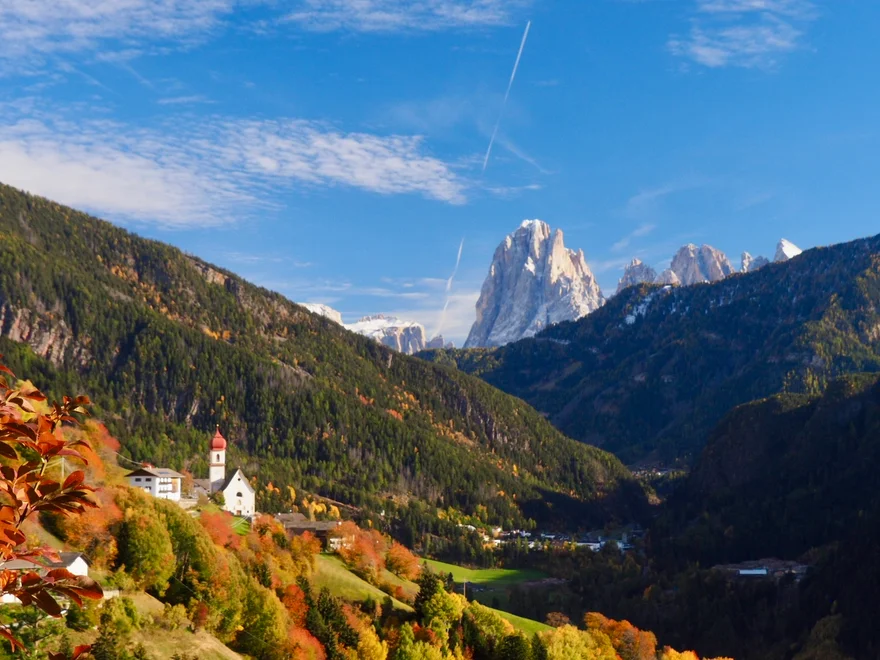
The church at St. Peter among autumn trees with Langkofel behind.
St. Peter is already in sight when we turn for home.

St. Ulrich / Ortisei

A handsome town with two ways up

St. Ulrich, also known as Ortisei, strikes us as rather smart. There are handsome hotels with extensive spas and beautifully kept houses. We suspect the prices are pretty smart too. It’s a lovely town for a stroll, and the location takes some beating. One cable car goes up to Seceda via Furnes, another to the Seiser Alm. We take the first. Down here at the valley station we have no idea that we’ll be walking part of the way.

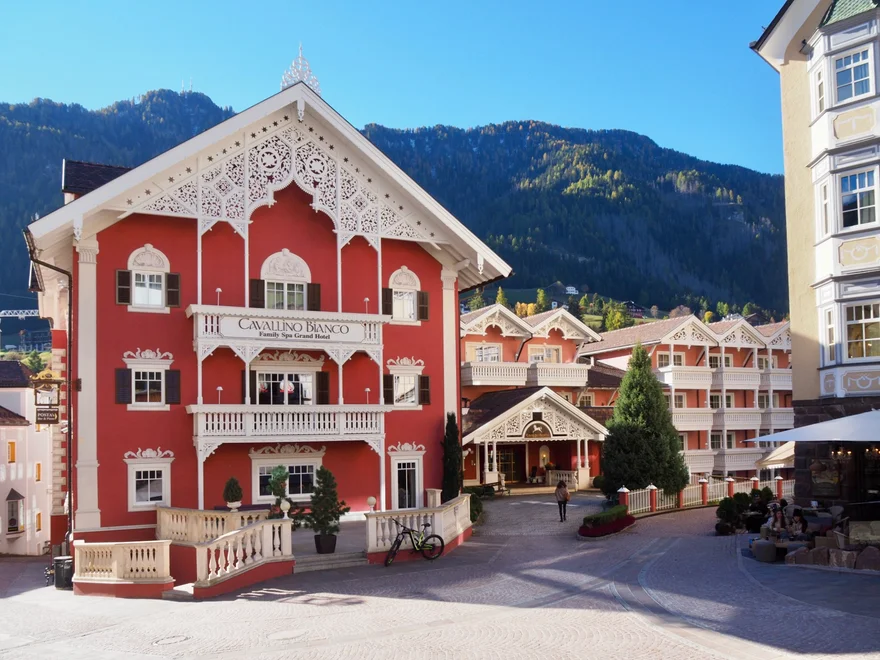
Ornate red façade of the Cavallino Bianco hotel on a paved street in Ortisei.
There’s plenty to look at down in Ortisei, too.

Seceda

A cable car ride with a climb thrown in

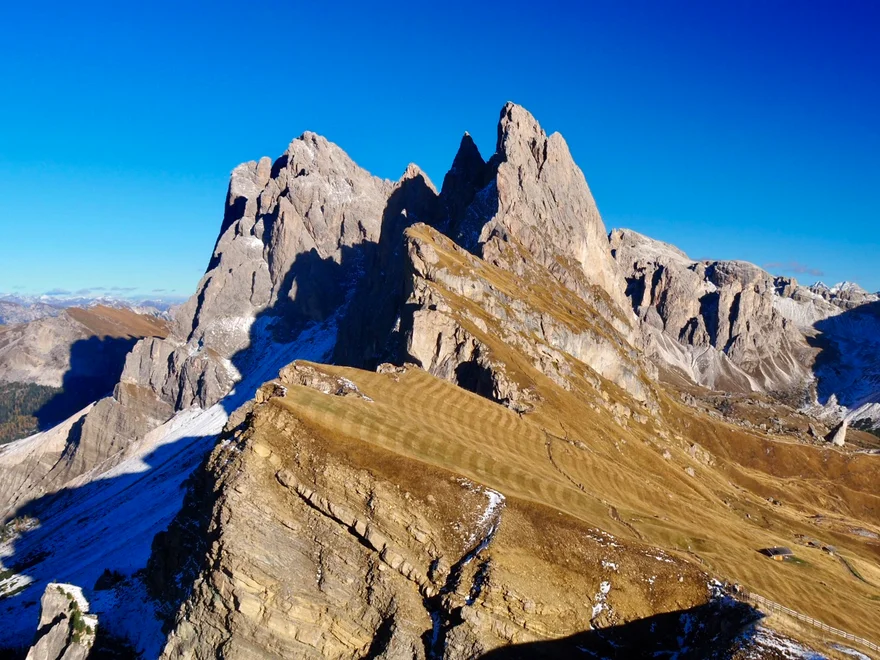
At €74 each for a return ticket, the ride is memorable before we even set off. Small gondolas take us from Ortisei to Furnes. A much larger cabin is supposed to carry us up the steep second leg. Only it isn’t moving. Some people say they’ve already been waiting an hour. The official explanation is wind, though there’s talk of a mechanical fault. We never find out. After another half-hour we set off on foot. It’s quite a climb through the woods, up steep ski runs and finally across open hillsides, some 900 metres of ascent in about three hours. Others have had the same idea. The unexpected effort gives us something to talk about on the way. At the top we look across to Langkofel and the Sella massif, then walk to the ridge to see the jagged Geisler peaks. The ground falls away beside us and there are mountains whichever way we turn. Worth the climb. Thankfully the cable car is running again by afternoon and takes us all the way back to Ortisei. Parking comes to another €30. A wonderful day, an expensive outing and considerably more exercise than we booked.

Walkers on the open slopes below the jagged Geisler peaks at Seceda.
At last, the view along the ridge to the Geisler peaks.

The operator recommends buying tickets online in advance. In 2026 summer services run until 2 November, with winter services scheduled to start on 4 December. Another approach is to take the Col Raiser gondola and hike up to Seceda from its upper station. It has its own operating dates.

Seiser Alm

A long loop and the last of the afternoon light

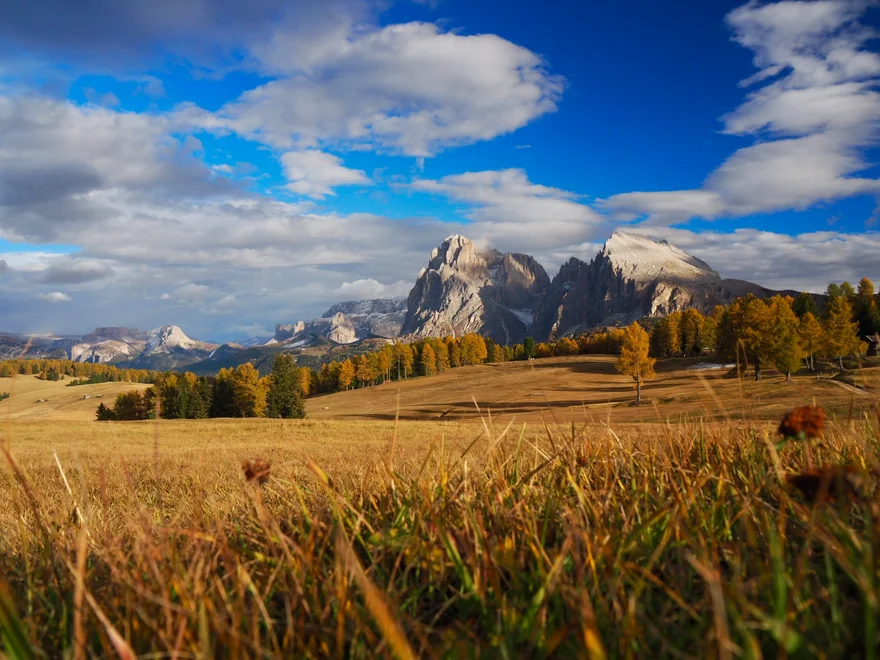
Next morning we drive to Seis am Schlern and take the gondola to Compatsch. At nearly 2,000 metres the land opens out into a broad plateau. After yesterday’s queue and climb, the sheer space feels generous. Long views, open grassland and surprisingly few people on the trail. We follow the Hans-und-Paula-Steger-Weg for a good stretch before taking other paths to complete our loop. Langkofel and the Sella massif stay in sight, with the Schlern and glimpses into the valleys as well. Late in the afternoon the sun breaks through. Low light catches the mountains and we keep stopping. Across the valley we recognise Seceda and the Geisler peaks. Langkofel rises on our side. It’s hard to tear ourselves away.

Meadows and autumn larches below Langkofel and Plattkofel under a cloudy sky.
Open meadows, with the mountains in view for much of the walk.

The gondola from Seis takes us to Compatsch. The one from Ortisei reaches a different part of the plateau. Tickets from Seis can be bought online in advance. Summer services here also end on 2 November 2026. A bus serves Compatsch during the break before the winter season. Access and parking restrictions apply if you drive.

St. Johann in Ranui

Slow travel in the Villnöss valley

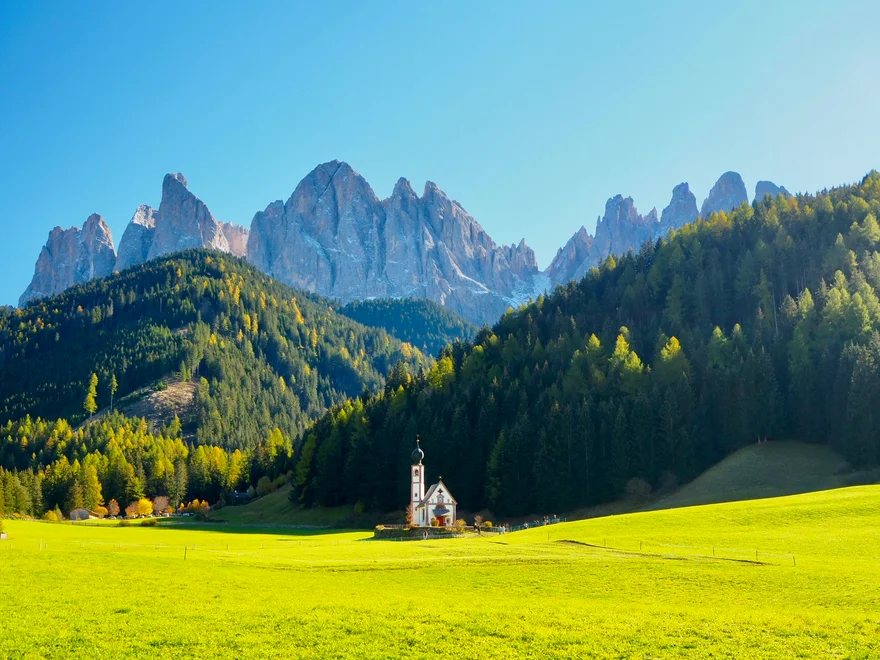
We’ve saved the Villnöss valley for the day we leave. I’d read about Slow Food Travel and promised Angie a quiet outing. In Ranui we find coaches and visitors from all over the world. Somewhere along the way we seem to have taken “slow” to mean “empty”. Still, the little church of St. Johann in Ranui beneath the Geisler peaks is quite a sight. We see signs offering all-day parking for ten or fifteen euros. The path across the meadow to the church costs another five. The church itself is closed that day.

The little church of St. Johann in Ranui on a green meadow below forest and the Geisler peaks.
St. Johann in Ranui, a small church with quite a backdrop.

St. Magdalena

Up to the viewpoints above the village

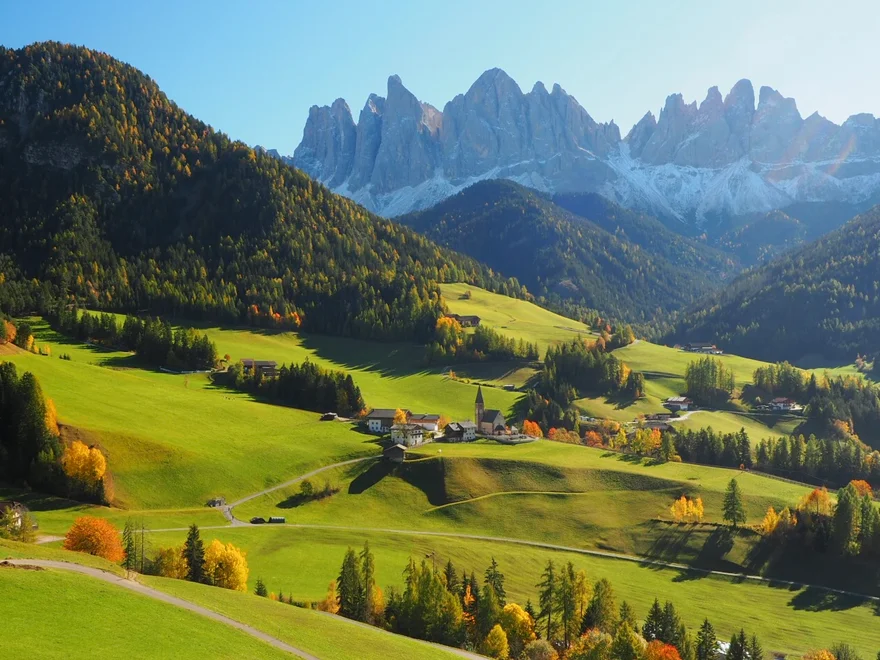
From Ranui we walk towards St. Magdalena, up to the church and on to the viewpoints on the hillside. Another great Dolomites scene opens up below us. A church, green meadows and the Geisler peaks beyond. We stop, look and take photographs. We can see why people travel a long way for this.

St. Magdalena church among green meadows beneath the Geisler peaks.
Looking back at the church and meadows from the hillside above St. Magdalena.

Zans

A long drive for a short walk

Finally we carry on to Zans at the head of the valley. The narrow road feels quite adventurous in places, though there’s little traffic this late in October. There’s no time left for a proper hike. We take a short stroll and come away rather underwhelmed. We’ve probably done both Zans and ourselves a disservice. Another time we’d give it a whole day, perhaps for the Adolf-Munkel-Weg beneath the Geisler peaks. Today we have to get home.

Looking back

Let the forecast decide

For a few days or a week in South Tyrol we like to book at short notice. Depending on the weather, we might take our bikes to Merano or our walking boots to the Dolomites. In late October it pays to check the lifts’ closing dates before booking.

Give Zans a day

For the half-day we had in the Villnöss valley, the walk from St. Johann in Ranui to the viewpoints above St. Magdalena was just right. Next time we’d give Zans a whole day and walk beneath the Geisler peaks. It was a long detour for a quick stop on the way home.