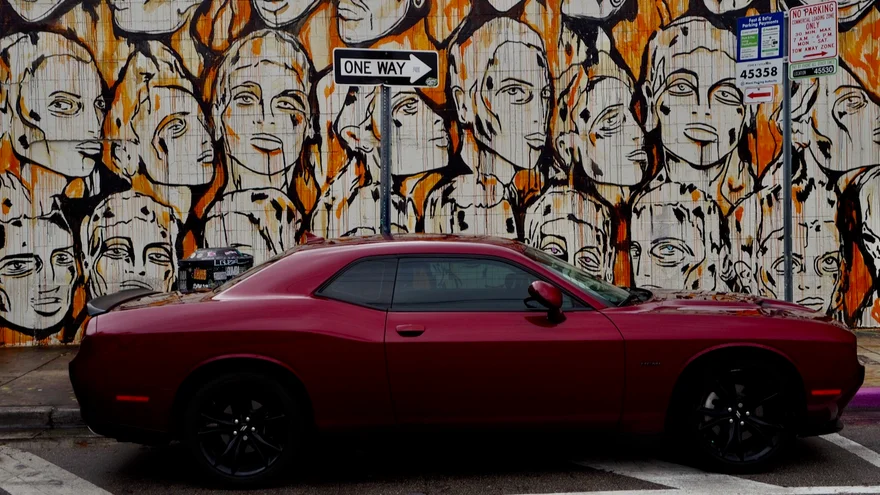
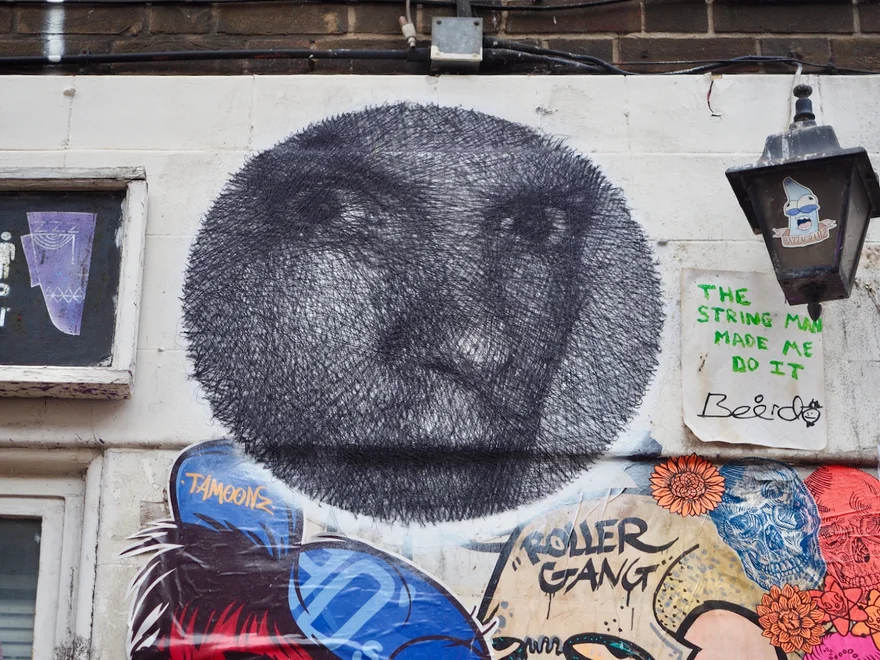
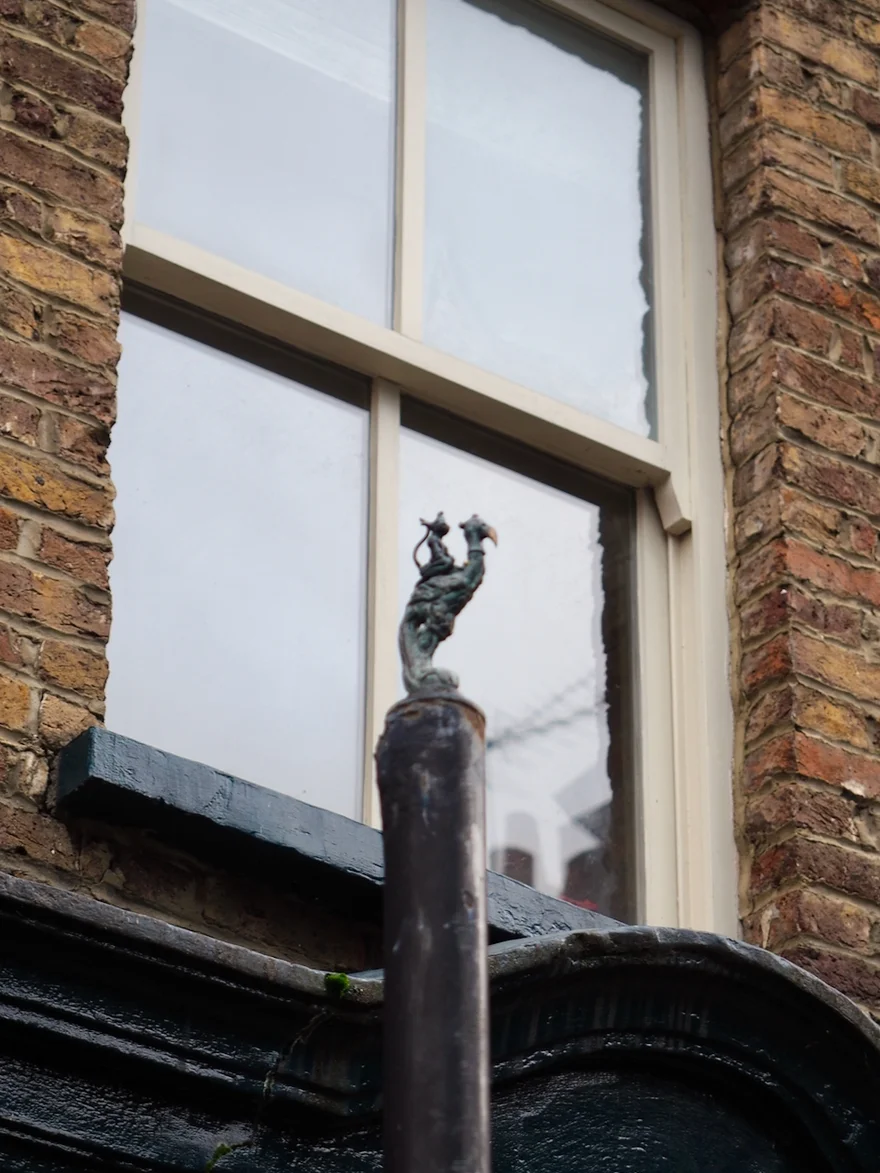

A large mural needs no introduction. A whole wall full of faces is hard to miss. A small thread portrait, a sticker or a tiny sculpture above a doorway is another matter. We might walk straight past. Or notice something without thinking it’s worth stopping for.
Since a guided walk through London’s East End, we stop more often.
In January 2023, we explore the streets around Brick Lane with “Alternative London”. We look at large murals and small works, lettering, stickers and things we don’t yet have names for. A picture made from stretched threads? A little figure up there? Without someone pointing them out, we would have missed both.
We learn about the artists and their techniques. And about how working on the street shapes what they do: without permission, there may not be much time to spare. A sticker prepared in advance can go up quickly. Alongside it are large commissions, including work for familiar brands. What we might casually group together as “street art” is made for very different reasons.
We can’t remember everything. But we leave looking at things differently.
Following a trail
On later journeys, we often consider booking another tour. There must be someone in Miami, Toronto or Athens who could show us things we’d otherwise walk past. In the end, we head out on our own. We enjoy the search, and being free to decide where to linger.
We do a little research first. Which artists work here? Which pictures would we like to see? Where are they supposed to be? A few locations become a route through the city.
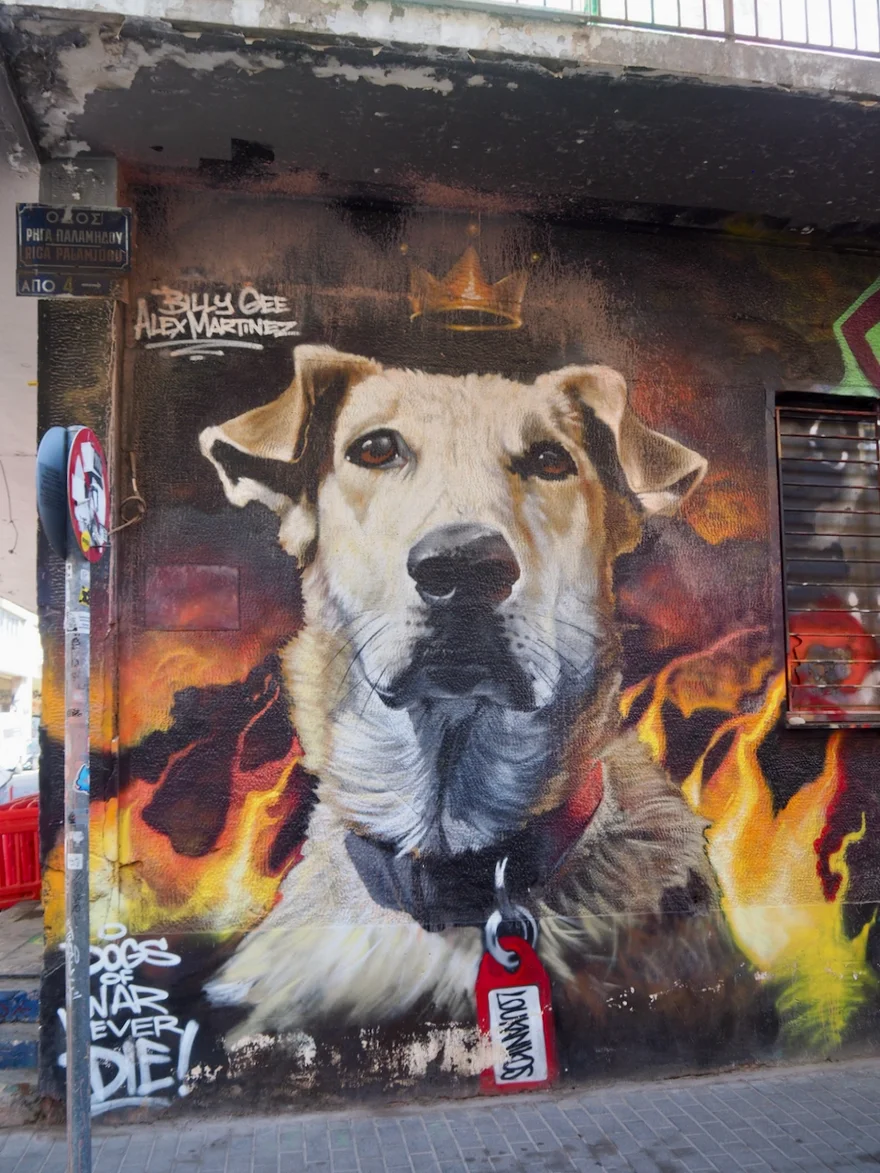
In Athens we look for the downward-pointing hands after Dürer, and the enormous reclining man whose body stretches across a façade, windows and all. And Loukanikos: artists have commemorated the dog who accompanied the Athens protests on a wall in Psirri. On the way, we come across other images. Later, in quite different places, we recognise some of the same distinctive styles without yet knowing the artists’ names. We look more closely at utility boxes and garage doors. And occasionally upwards too.
Of course, this doesn’t take us off every tourist trail. Toronto’s Graffiti Alley is in the guidebooks, and in Wynwood street art has long been a reason to visit the neighbourhood at all. Even so, the search leads us down streets we might never have turned into. Between two pictures are houses, shops, cafés and ordinary city life. We set out to see one particular work and spend half a day exploring the streets around it.
Gone
Sometimes we can’t find the picture we’re looking for.
We compare the photograph on our phone with the wall in front of us. Was it across the road? Is the entrance around the corner? Or has it been painted over?
Street art doesn’t reliably follow our research. Some works are hidden; others have disappeared. An old photograph online is no promise that there will still be something to see when we arrive.
We almost always discover something else, though. Not necessarily a famous work, nor even one whose name we eventually find out. Sometimes it’s just a small detail beside a door.